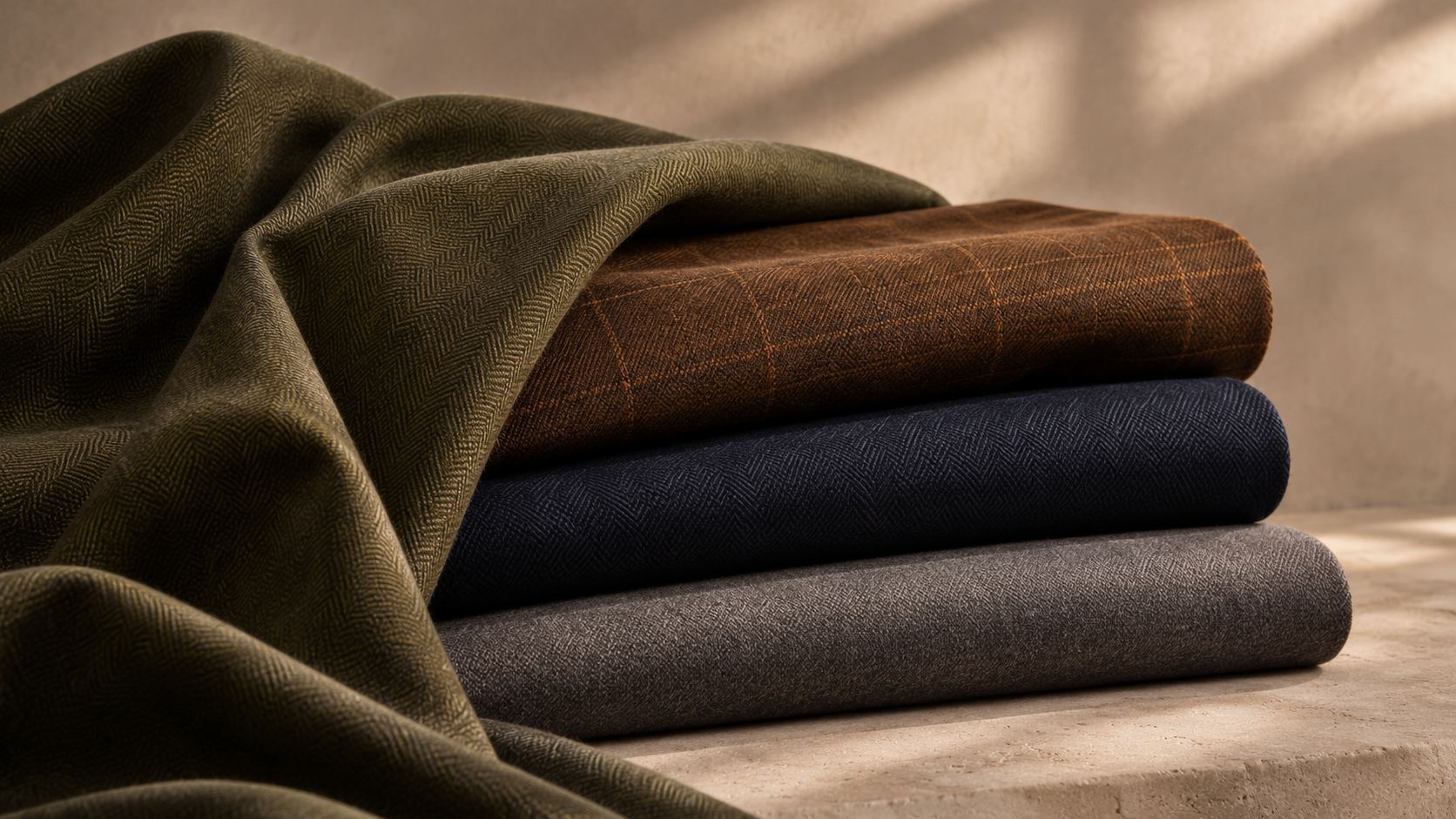
Because there's more to a good suit than meets the eye.
There's a particular pleasure in choosing a beautiful fabric.
You pick up a length of wool, feel the texture between your fingers, hold it towards the light, and suddenly a colour you've walked past a hundred times becomes rather interesting.
A good fabric has character. Some are beautifully smooth and refined. Others have a little texture, a softer handle or a more relaxed appearance.
And while colour and pattern might catch your attention first, they're only part of the story.
The real difference is often in how a fabric feels, moves and behaves once it's made into something you'll actually wear.
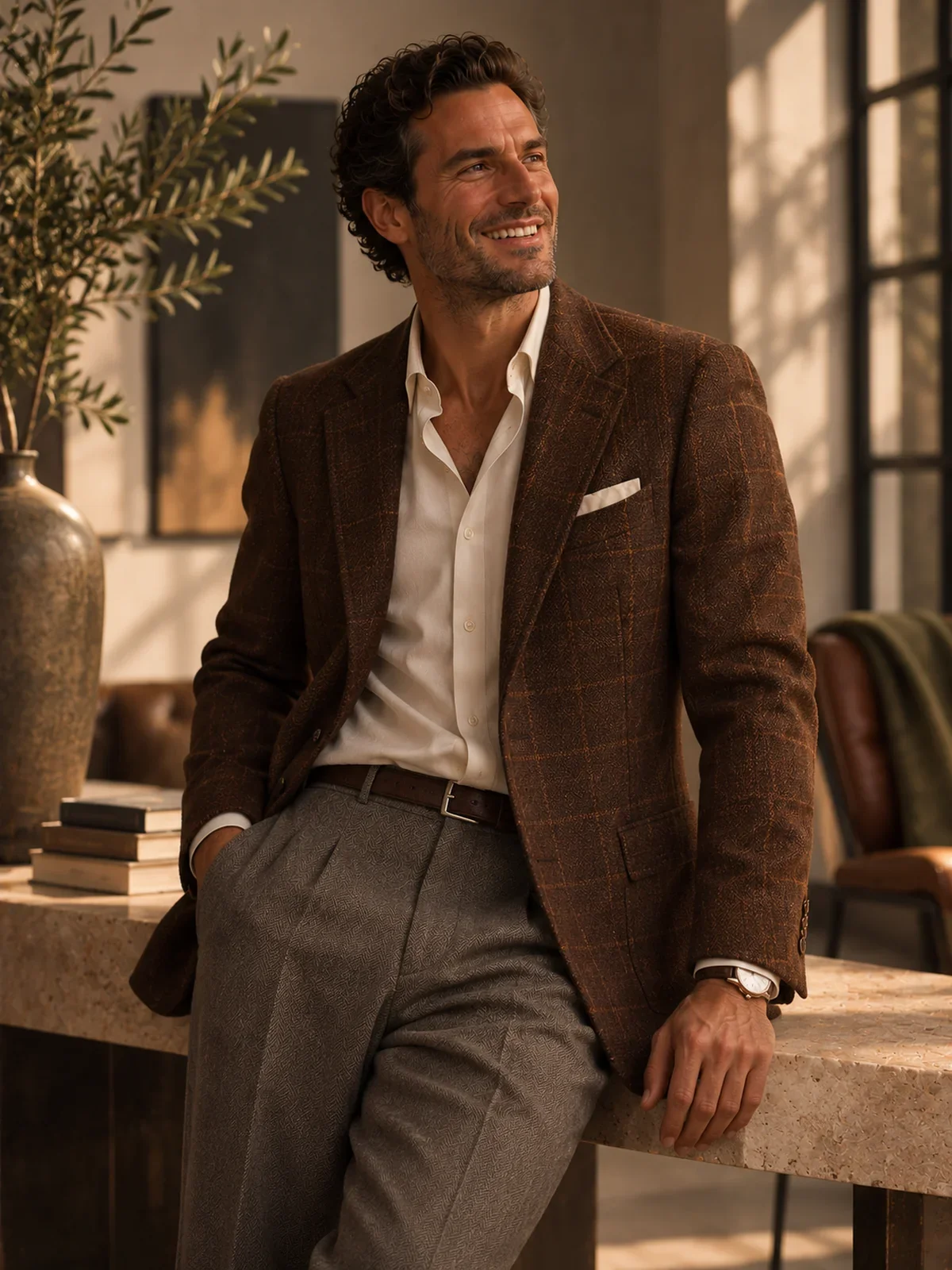
Wool. More interesting than you think.
Wool is the foundation of most good tailoring, and with good reason.
It's naturally breathable, resilient, comfortable and remarkably versatile. It can be woven into something beautifully lightweight for summer or something richer and more substantial for the colder months.
But not all wool is created equal.
A fine worsted wool has a smooth, refined finish, making it particularly well suited to classic business suits and more formal occasions. Flannel, on the other hand, has a softer, slightly brushed surface that brings warmth and depth to autumn and winter tailoring.
Then there's hopsack, with its open, textured weave. It's a favourite for relaxed jackets because it feels less formal and works beautifully with contrasting trousers.
And that's before we start talking about wool blended with silk, linen or cashmere.
Each brings something different to the party.
The interesting question isn't necessarily which fabric is the most luxurious. It's which one makes the most sense for you.
Weight, texture and the seasons
One of the first things worth considering when choosing a fabric is its weight.
Lightweight cloth can feel wonderfully comfortable in warmer weather, particularly when combined with a breathable weave. Heavier fabrics tend to have more substance, often creating a lovely drape and a sense of structure.
But heavier doesn't automatically mean better, and lighter doesn't always mean cooler.
The weave, fibre composition and construction of the garment all play their part.
Linen, for example, is a wonderful summer fabric. It's breathable, full of character and has a wonderfully relaxed appearance.
Does it crease? Absolutely.
That's rather the point.
A linen jacket isn't supposed to look as though it's just stepped out of a pressing machine all day. Its charm lies in looking a little lived-in.
For those who prefer something slightly more composed, wool-linen-silk blends can offer an appealing balance of texture, breathability and drape.
The seasons matter, of course, but so does your lifestyle. A summer wedding in southern Italy asks rather different things of a suit than a November afternoon in London.
Choose with your hands, not just your eyes
A photograph can tell you a great deal about a fabric's colour and pattern. What it can't always communicate is how that fabric actually feels.
The softness of brushed flannel. The dry texture of linen. The subtle sheen of silk. The way a beautiful wool cloth falls naturally rather than feeling stiff.
These are things worth experiencing.
And they're part of what makes choosing custom clothing enjoyable.
A fabric should do more than look impressive on a hanger. It should complement the design, feel comfortable throughout the day and suit the occasions for which you'll wear it.
Sometimes the right choice is a beautifully understated navy wool. Sometimes it's an olive blend with a little texture, or a tobacco jacket that looks even better in natural light.
There isn't always one correct answer.
That's where personal taste comes in.
After all, the best fabric isn't necessarily the most expensive, the finest or the one with the most impressive name attached.
It's the one you enjoy wearing.
And that's a rather good place to start.
Curious about the possibilities? Explore our Custom Suits and discover how the right fabric can make all the difference.